Everything Chicago Biomedical Services publishes on biomedical equipment calibration in one place: the full service overview, the related services we provide, and the locations we cover.
Use this page to find the exact biomedical equipment calibration service you need. Everything Chicago Biomedical Services publishes for this area is listed below, starting with the full overview.
What biomedical equipment calibration involves
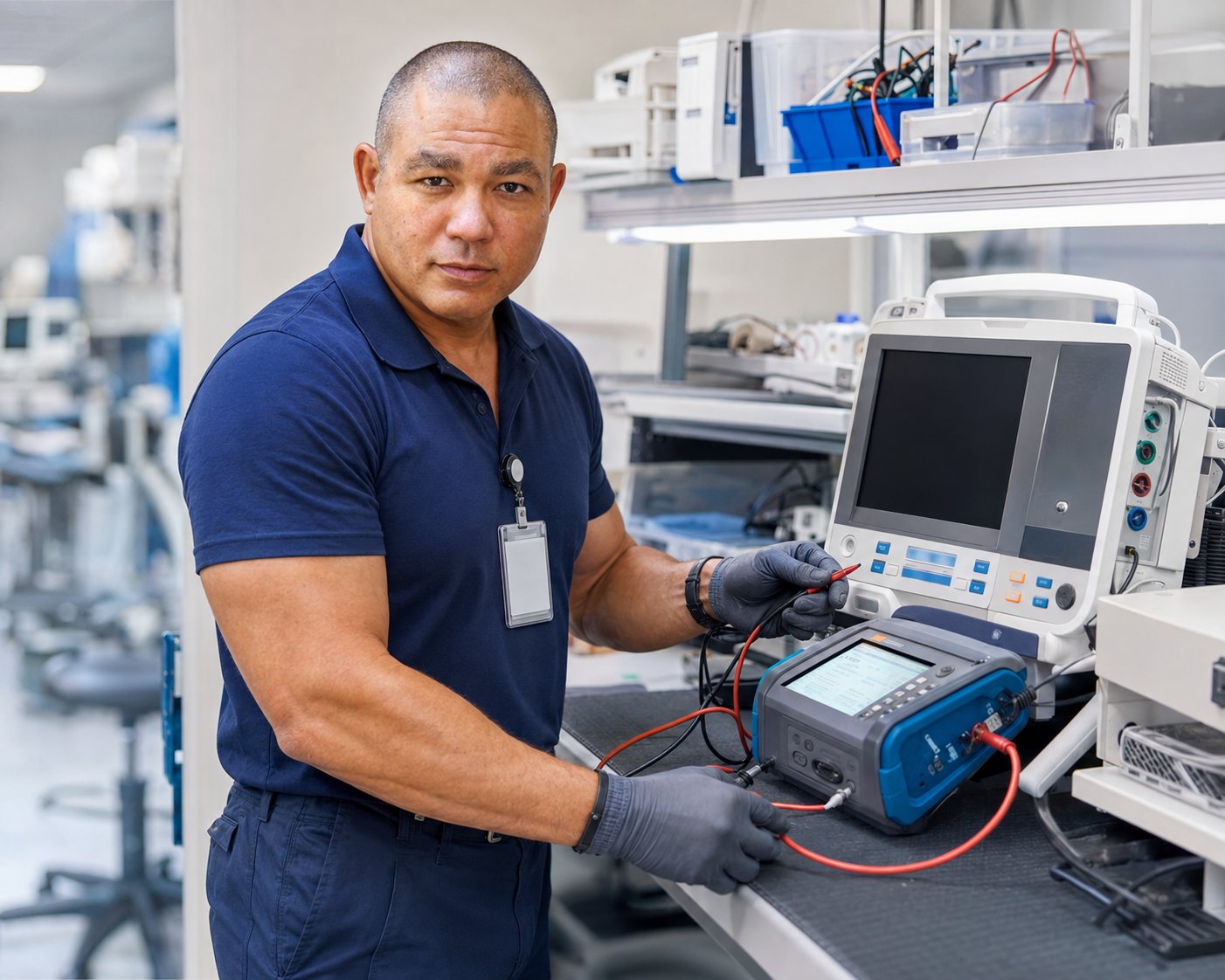
Calibration is the measurement step, not the repair step. A device is compared against a reference standard with documented traceability, the deviation is recorded, and the instrument is adjusted until it reads true across its working range — then the as-found and as-left values are both written down, because the as-found figure is what tells you whether anything treated on that device since the last visit was affected.
Every visit produces documentation an inspector can read without a translator: what was done, to what standard, by whom, and when it is next due.
Every calibration performed produces two numbers that matter: what the device read when we arrived, and what it read when we left. Skipping the first one makes the record useless in an audit, because it removes any way to establish whether the instrument had drifted out of tolerance during the interval it was in clinical use.
Calibration intervals are not arbitrary. They come from the manufacturer's specification, the device's history, and how hard the department runs it. An instrument that drifts twice in a row needs a shorter interval, not the same one repeated, and a technician who does not adjust the schedule is recording a problem rather than solving it.
Work is performed to manufacturer specification and the applicable regulatory standard, and the record says which one was applied.
Technicians are qualified for the equipment they touch, and the qualification is on file rather than asserted.
Findings are reported plainly, including the ones that mean a device should be taken out of service.
Calibration intervals are not arbitrary. They come from the manufacturer's specification, the device's history, and how hard the department runs it. An instrument that drifts twice in a row needs a shorter interval, not the same one repeated, and a technician who does not adjust the schedule is recording a problem rather than solving it.
What to expect
Scope is written down before the work begins, including what is excluded. Most disputes about equipment service are really disputes about scope that nobody put in writing.
Why the record matters
Gaps in a maintenance record are read as gaps in maintenance, whether or not the work was done. The paperwork and the work are the same obligation.
Send the make, model and service history and you will get a scoped answer instead of a price range.
Biomedical Equipment Calibration News & Industry Insights
Current developments in biomedical equipment calibration, with sources for further reading.
Repair or Replace? A Clear-Eyed Look at Biomedical Equipment Calibration
The right call protects both budget and safety. Chicago Biomedical Services gives facilities honest biomedical equipment calibration guidance instead of a sales pitch.
Smart Capital Planning Starts With Honest Biomedical Equipment Calibration
You cannot budget for what you cannot see. Chicago Biomedical Services gives facilities the biomedical equipment calibration visibility that makes capital planning credible.
Why Biomedical Equipment Calibration Documentation Is Now an Audit Essential
Surveyors increasingly expect a clean paper trail for biomedical equipment calibration. Chicago Biomedical Services delivers complete service records so your compliance file is always inspection-ready.
Workforce Shortages Make Reliable Biomedical Equipment Calibration Harder to Find
A tightening HTM labor market means dependable biomedical equipment calibration is at a premium. Chicago Biomedical Services gives facilities a steady, accountable partner they can rely on.